


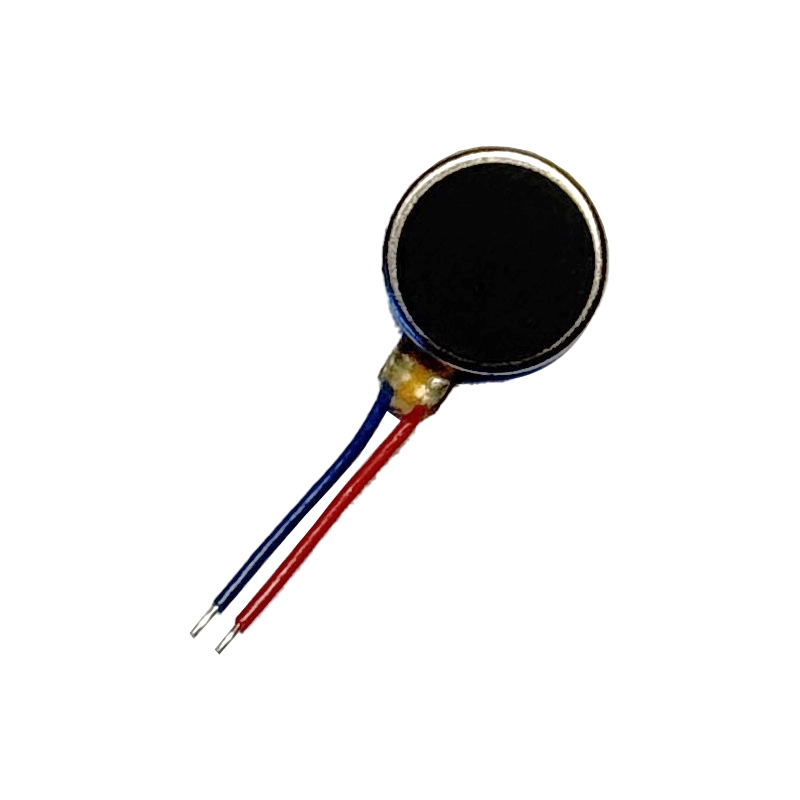
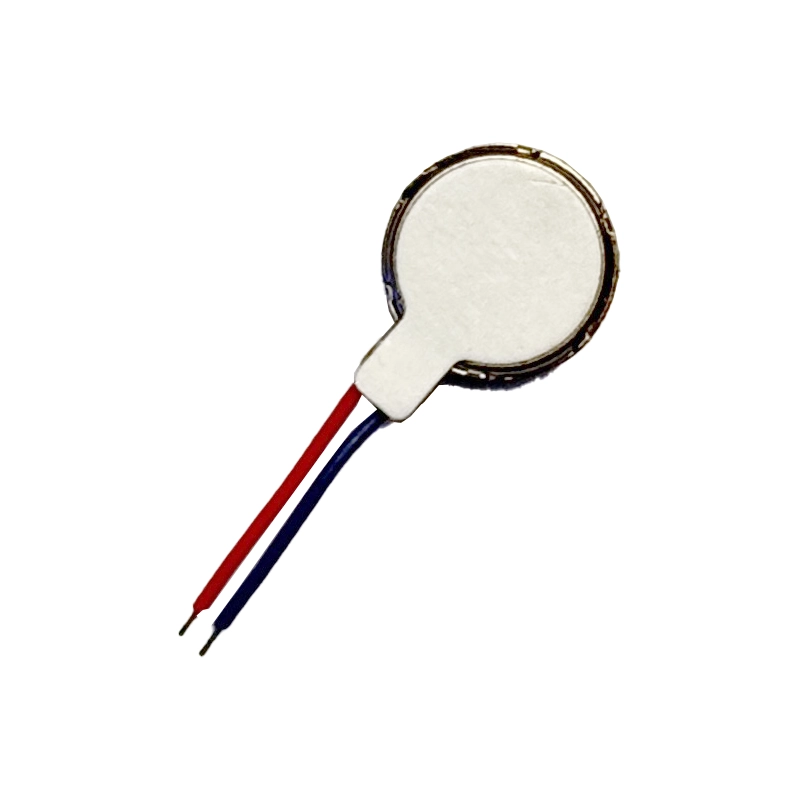
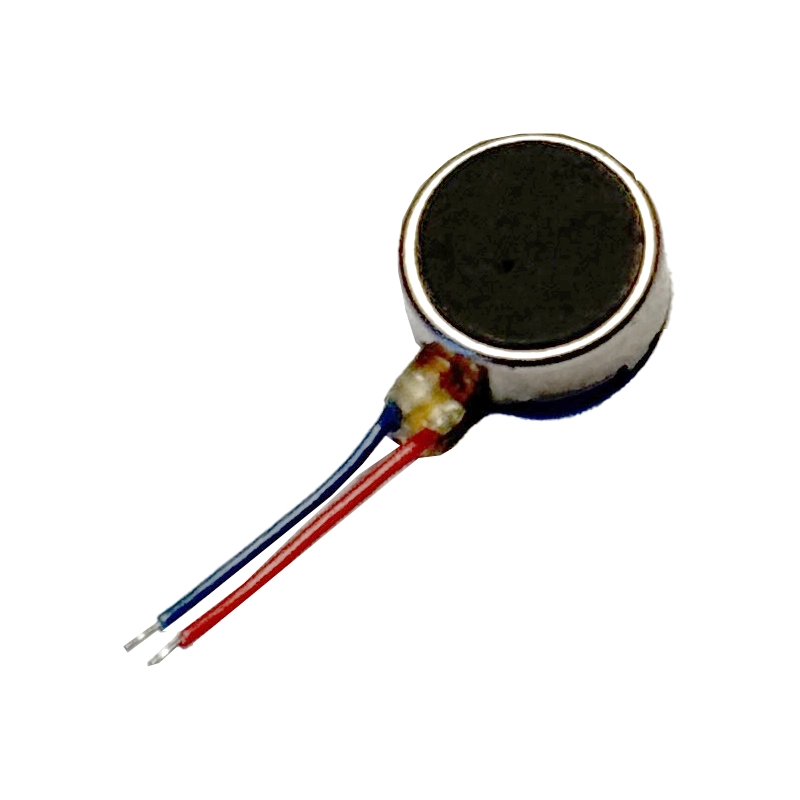


Coin vibration motor technology is what makes your phone buzz softly instead of ringing loudly, and the 0834 Round Micro Vibration Motor lets you build that same silent, tactile alert into your own electronics. This tiny 8mm disc motor is the go-to component for makers who want compact, reliable haptic feedback without the bulk of a speaker or the noise of a buzzer. Whether you’re building a wearable, a smart notification device, or a fidget gadget, this motor spins up instantly and fits into the tightest enclosures.
Technical Specifications
Every coin vibration motor spec below has been verified against the official LEADER LCM0834A1195F datasheet, so you know exactly what you’re building with.
| Parameter | Value |
|---|---|
| Diameter | 8 mm |
| Thickness | 3.85 mm |
| Rated Voltage | 3V DC |
| Operating Voltage Range | 2.7V – 3.3V DC |
| Rated Speed | 9000 RPM |
| Rated Current | 80 mA |
| Starting Voltage | 2.3V (min) |
| Insulation Resistance | 10 MΩ |
| Operating Temperature | -20°C to +60°C |
| Motor Type | Flat ERM (Eccentric Rotating Mass) DC Motor |
What Makes It Stand Out
What separates a good coin vibration motor from a mediocre one is consistency, and this 0834 unit doesn’t disappoint. Verified against the official LEADER LCM0834A1195F datasheet, it spins at a steady 9000 RPM the moment it crosses 2.3V, giving you predictable, repeatable vibration every single time.
Driving it is simple too. Since this is a two-wire brushed motor rather than an I2C module, you don’t need a complex driver chip — a single NPN transistor or logic-level MOSFET handles it fine, and if you want ready-made code, the VibrationMotor Arduino library wraps the pattern logic for you, making this coin vibration motor one of the easiest components to add haptic feedback to any project.
Why Makers Choose This
Makers pick this coin vibration motor for one simple reason — it just works, out of the box, on a breadboard, with nothing exotic to source. It runs happily off a coin cell, a LiPo, or a 3.3V rail from your ESP32 or Arduino, and its slim profile means it disappears inside 3D-printed enclosures, wearable straps, and PCB sandwiches without adding bulk — and it’s available at the best price for makers across India.
If you’re new to driving vibration motors safely, this step-by-step Arduino vibration motor tutorial walks through the transistor circuit, the flyback diode you’ll want for protection, and PWM code to vary the vibration strength — everything you need to go from unboxing to a working prototype in one sitting.
Important Links
🔗 Official Datasheet (LCM0834A1195F) — verified electrical and mechanical specifications from the manufacturer
🔗 VibrationMotor Arduino Library — open-source GitHub library for pattern-based vibration control
🔗 Arduino Vibration Motor Tutorial — wiring diagram, transistor driver circuit, and PWM strength control code
Best Used For
This coin vibration motor fits neatly into dozens of maker projects. Build a silent notification wearable that taps your wrist when a message arrives, or add haptic confirmation to a custom mechanical keyboard or DIY game controller so every press feels intentional. It’s equally at home in an accessibility device, giving a gentle buzz cue instead of a beep for users who need tactile rather than audible feedback. Robotics enthusiasts use it to simulate collision feedback in small bots, while IoT tinkerers wire it into doorbell and security systems for a discreet local alert alongside a phone notification.
Frequently Asked Questions
Q: Can I run this coin vibration motor directly from an Arduino or ESP32 GPIO pin?
Not directly for sustained use — GPIO pins can’t safely supply the motor’s 80mA rated current long-term. Drive it through an NPN transistor or logic-level MOSFET, with the microcontroller pin controlling the transistor’s base or gate.
Q: What’s the difference between the 0834 and other coin motor sizes?
The number refers to the diameter and thickness in millimeters — 0834 means roughly 8mm diameter. The 0834 series remains one of the most popular coin vibration motor sizes for compact electronics because it balances small footprint with useful vibration force.
Q: Does this motor have polarity?
No — being a simple DC brushed motor, it will spin in either direction depending on how you connect the two leads, so polarity isn’t a concern during wiring.
Q: Can I control the vibration intensity, or is it just on/off?
You can vary intensity using PWM. Lower duty cycles produce a gentler buzz, while a full 3V duty cycle gives maximum vibration strength — handy for tap versus alert-style feedback patterns.
Q: Is this coin vibration motor suitable for wearable projects?
Yes, its slim profile and light weight make it one of the most popular choices for wearables, fitness bands, and smartwatch-style builds where space is tight.
Related Products
NPN Transistor BC547
1N4007 Flyback Diode




Reviews
Clear filtersThere are no reviews yet.