


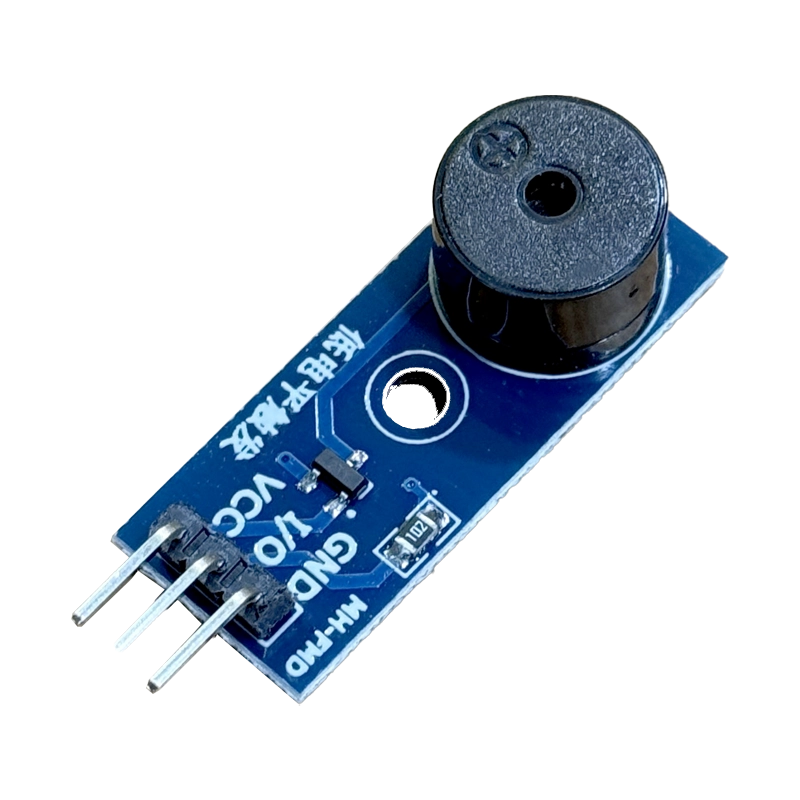
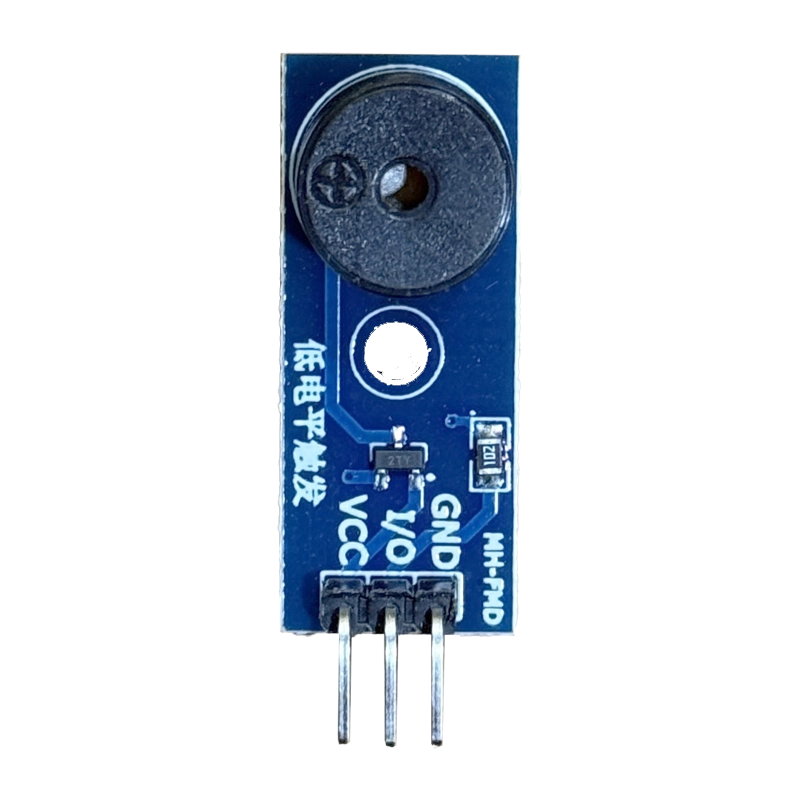
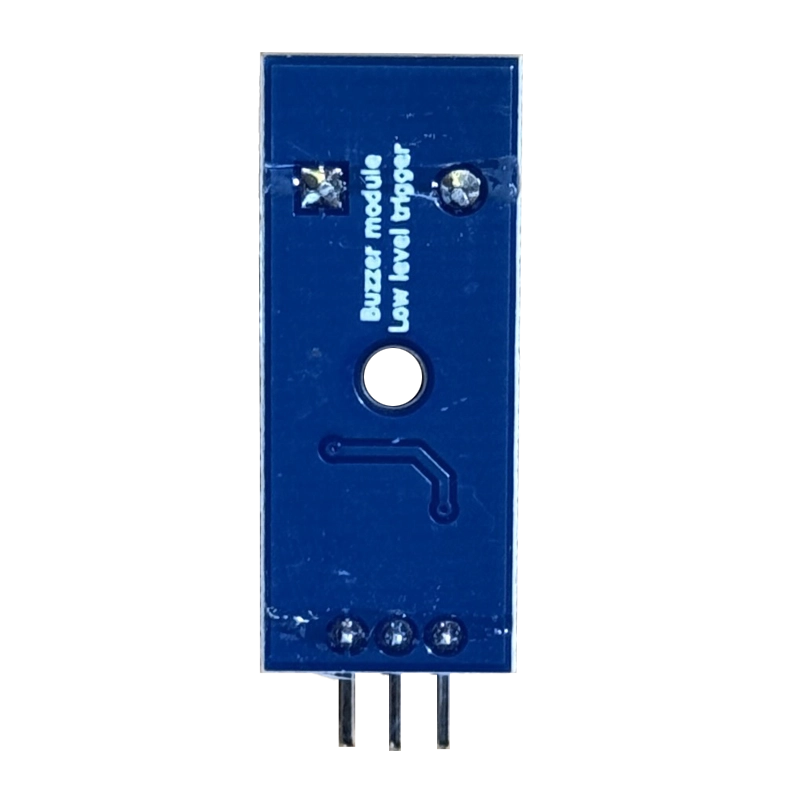
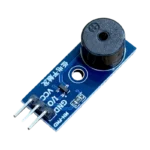
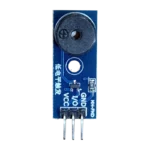


Active buzzer module — three words that describe the simplest, most reliable way to add sound to any electronics project. Whether you are building a fire alarm, a countdown timer, or an IoT notification system, this compact 3-pin active buzzer module delivers an instant, loud beep the moment you drive the signal pin high — no tone generation code, no frequency math, no extra components required. Just connect power and a GPIO, and your project speaks.
Technical Specifications
The active buzzer module is built for reliable performance across a wide range of platforms. Here is a complete look at its verified specifications:
| Parameter | Value |
|---|---|
| Operating Voltage | 3.3V – 5V DC |
| Operating Current | 30mA @ 5V DC |
| Resonance Frequency | 2500Hz ± 300Hz |
| Sound Output Level | 85dB @ 10cm |
| Interface Type | 3-Pin (VCC, GND, Signal) |
| Operating Temperature | -20°C to 70°C |
| Dimensions | 34.28 × 13.29 × 11.5 mm |
| Weight | 7g |
| Compatibility | Arduino, ESP32, STM32, Raspberry Pi Pico, and more |
What Makes It Stand Out
The standout feature of this active buzzer module is its dual-voltage compatibility. Operating across the 3.3V–5V DC range, it works equally well whether you are using a 5V Arduino Uno, a 3.3V ESP32, an STM32 Nucleo, or a Raspberry Pi Pico. You do not need a level shifter or a voltage regulator — just plug it into whichever logic supply your board provides. Full electrical specifications are available in the official module datasheet for reference.
The module produces a fixed resonance frequency of 2500Hz ± 300Hz with a sound output of 85dB at 10cm — loud enough to be clearly heard in a classroom, workshop, or home lab even with background noise. The 3-pin interface connects directly to any digital output pin, and the current draw of 30mA at 5V is low enough to drive from a standard GPIO on most platforms with no transistor required.
For makers who want to go beyond a simple on/off beep, the ezBuzzer library on GitHub unlocks non-blocking beep patterns and melody sequences using the same active buzzer module. The library supports active HIGH and active LOW configurations, runs on all Arduino architectures without delay() calls, and keeps your main loop completely responsive while the buzzer handles its own timing.
Why Makers Choose This
Indian makers and students consistently choose this active buzzer module because it just works — immediately, with a single digitalWrite(). There is no library to install for basic use, no I2C address to configure, no register map to study. For a beginner completing their first alarm circuit before a college project demo, that simplicity is genuinely valuable. At the best price available in India right here at Techiesms, it is also the most cost-effective audio output component you can add to any kit.
For a deeper walkthrough covering wiring, beep patterns, and advanced library usage, the Arduino Buzzer Library tutorial on ArduinoGetStarted.com is an excellent step-by-step reference. The compact footprint and low weight mean this active buzzer module also fits into nearly any enclosure — wearable alert bands, door alarms, and battery-powered IoT nodes alike.
Important Links
🔗 Official Module Datasheet (PDF) — Complete electrical specifications and pin descriptions for this active buzzer module
🔗 ezBuzzer Library — GitHub — Non-blocking buzzer library supporting active and passive buzzers on all Arduino architectures
🔗 ezBuzzer Library Tutorial — ArduinoGetStarted — Step-by-step guide covering wiring, beep patterns, and melody playback with code examples
🔗 Arduino Piezo Buzzer Tutorial — ArduinoGetStarted — Comprehensive guide covering active and passive buzzer wiring and code for beginners
Best Used For
This active buzzer module shines in projects where audio feedback must be dead simple and reliable. It is the go-to component for home security systems — connect it to a PIR motion sensor or a magnetic door sensor and it triggers an audible alarm the instant an intrusion is detected. Makers love it for kitchen timers and countdown clocks built around Arduino, where a single beep or a repeating pattern signals the end of a cycle with zero processor overhead. It is widely used in industrial machine status panels where operators need a clear audio indicator for fault conditions, low stock alerts, or process completion — reliable, loud, and requiring no code overhead. Students use it in robotics and obstacle-avoidance bots to beep when an ultrasonic sensor detects something too close, giving the bot an audible proximity alert without taxing the processor. Finally, it is excellent for ESP32-based IoT notification gadgets that listen for MQTT messages from a server and trigger the active buzzer module to signal a doorbell, parcel arrival alert, or server downtime warning.
Frequently Asked Questions
Q1: What is the difference between an active buzzer module and a passive buzzer?
An active buzzer module contains a built-in oscillator that generates sound on its own when voltage is applied to the signal pin — no frequency code required. A passive buzzer is simply a piezo element that needs your microcontroller to continuously generate a PWM signal at a specific frequency. The active version is far simpler to use, especially for beginners.
Q2: Does this module work with an ESP32 at 3.3V logic?
Yes. The active buzzer module supports 3.3V to 5V DC, making it fully compatible with ESP32, ESP8266, and other 3.3V logic boards. Connect the Signal pin directly to any GPIO on your ESP32 and control it with digitalWrite().
Q3: Can I play different tones or melodies with this module?
The active buzzer module produces a fixed resonance frequency of 2500Hz — it cannot generate variable tones on its own. However, you can simulate beep patterns, morse code, or rhythmic sequences by switching the signal pin on and off at different intervals. For actual melodies with changing pitch, a passive buzzer is the better choice.
Q4: How much current does this module draw, and is it safe to connect directly to an Arduino pin?
The active buzzer module draws approximately 30mA at 5V. Arduino digital pins are rated for a maximum of 40mA, so direct connection is generally safe. For sensitive or high-duty applications, driving via a small NPN transistor such as a 2N2222 is recommended for extra safety.
Q5: Is this active buzzer module available at the best price in India?
Yes — Techiesms offers this active buzzer module at the best price in India, with fast shipping across the country. It is an essential component for any maker’s kit, and buying here ensures you receive a quality-tested module with seller support.
Related Products
PIR Motion Sensor Module
Arduino Uno R3 Board
ESP32 Development Board





Reviews
Clear filtersThere are no reviews yet.