




DC DC Boost Converter Module — Step Up from 3.7V to 5V / 8V / 9V / 12V
DC DC boost converter modules are the unsung heroes of portable electronics — and this compact 1.5A Mini DC-DC Boost Converter is one of the most versatile step-up solutions available for Indian makers, students, and IoT builders today. Whether you are running a project on a single 3.7V lithium battery and need a steady 5V for your microcontroller, 9V for a sensor array, or 12V for a relay or motor driver, this tiny module gets the job done without adding bulk to your build.
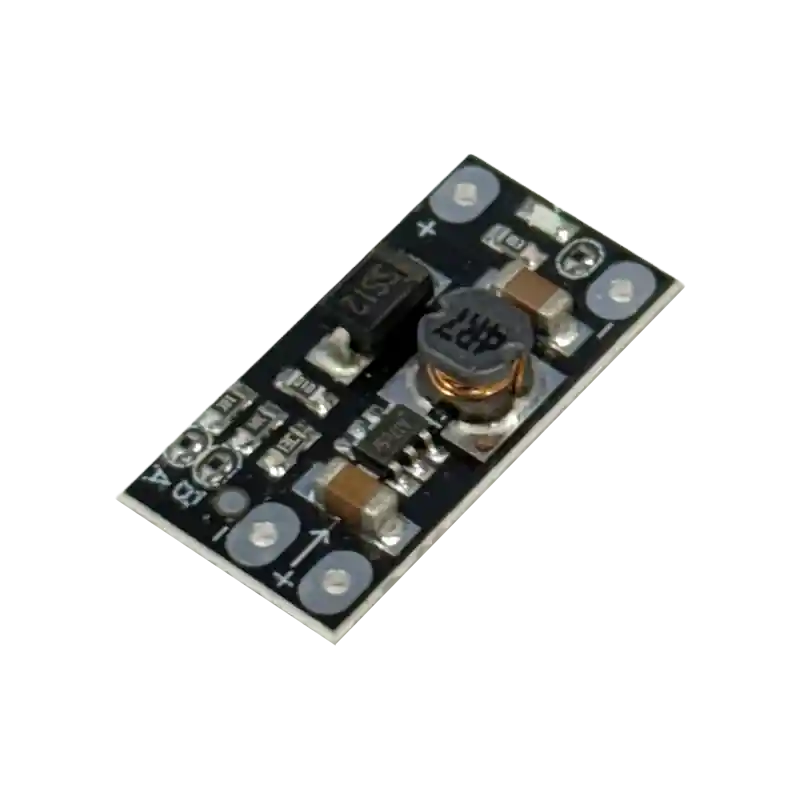
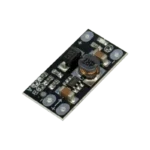
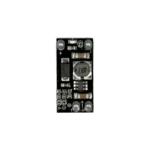
At just 22 × 11 × 3.6 mm and weighing only 2.35 grams, this module fits into tight enclosures, wearables, robotics platforms, and handheld gadgets with ease. Despite its coin-sized footprint, it handles real-world power demands reliably, making it an ideal companion for ESP32, Arduino, NodeMCU, and similar boards that need stable voltage from a battery source.
What Makes It Stand Out
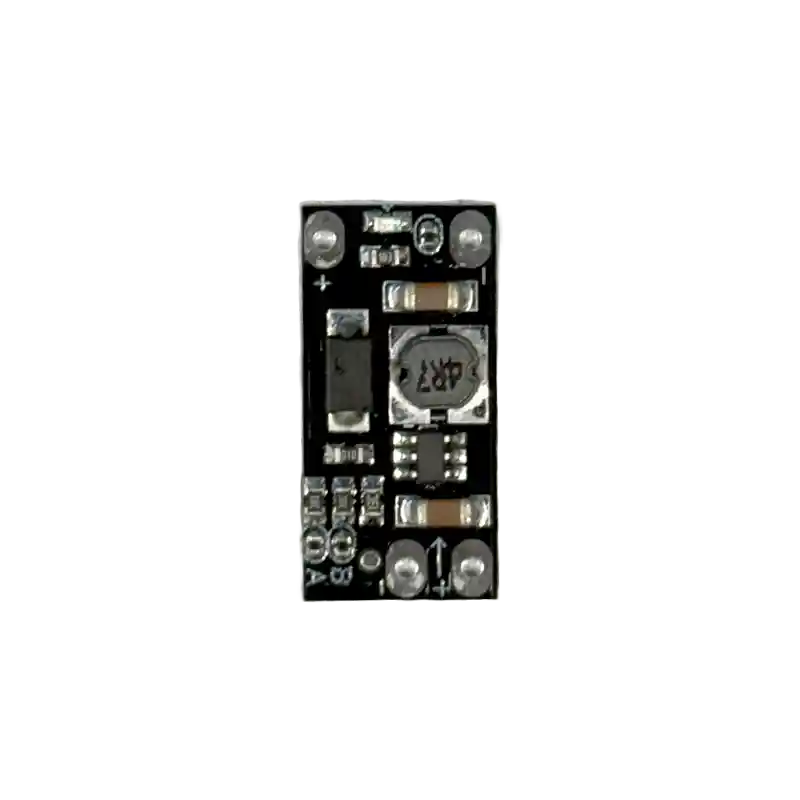
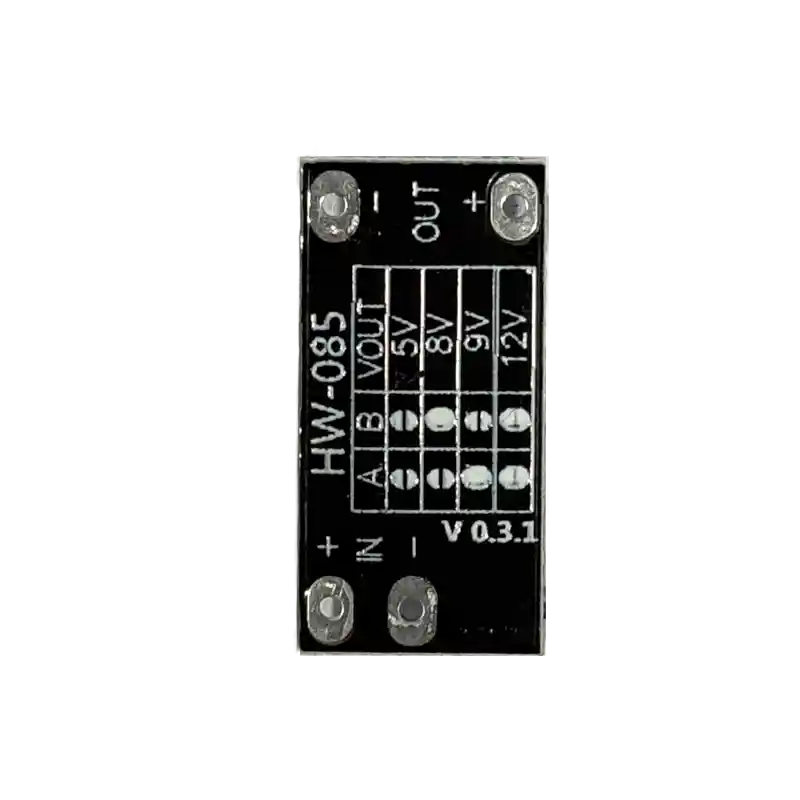
Most voltage regulators either require you to turn a potentiometer to set the output — risking accidental adjustment — or they are fixed to a single voltage. This DC DC boost converter takes a smarter middle path: four selectable output voltages (5V, 8V, 9V, and 12V) configured once via onboard solder pads, and then locked in place permanently. There are no dials to slip, no trimmer pots to drift over time. Once you solder the A and B pads to your required voltage, the output stays stable as long as your input is within range.
The module also includes an onboard LED power indicator that gives you instant visual confirmation of output status — extremely handy during prototyping. And if your project demands ultra-low standby current (think IoT devices on coin cells or small LiPo packs), the LED can be disabled by cutting the adjacent solder pad, dropping idle input current to below 1 mA.
Another practical advantage is the input voltage range: DC 2.5V up to (VOUT − 0.5V). This means you can power it not just from a 3.7V lithium cell but also from a partially discharged battery, two AA cells in series, a small solar panel, or a USB source. As long as the input is lower than your selected output voltage, the module boosts it cleanly. For a detailed look at module wiring and integration, the Cirkit Designer usage guide walks through pinouts and connection examples thoroughly.
Why Makers Choose This DC DC Boost Converter
For makers in India building battery-powered projects, finding a compact and affordable DC DC boost converter at the best price is often a challenge. This module solves that. You get four practical voltage levels — the exact voltages that most common modules, sensors, and actuators actually use — in a package smaller than a matchbox, for just ₹21.
The fixed-output solder pad design also makes this module more reliable in vibration-prone environments (robotics, vehicles) compared to potentiometer-based alternatives where the output can drift if the trimmer is accidentally bumped. For makers who want to set a voltage once and never worry about it again, this is the right design choice.
The efficiency of this boost converter exceeds 80%, meaning less heat generated and longer battery life compared to linear voltage regulators like the 7805 series. At higher output voltages such as 12V from a 3.7V input, the conversion is still efficient enough for practical IoT and robotics tasks. The module may run warm at sustained high loads, so for continuous high-current applications it is advisable to stay within the 1A recommended output current per voltage level. The DFRobot product page offers additional context on operating conditions for this module family.
Technical Specifications
Every DC DC boost converter project starts with verified numbers, and here are the datasheet-confirmed specs for this module:
| Parameter | Value |
|---|---|
| Input Voltage Range | DC 2.5V to (VOUT − 0.5V) |
| Output Voltages | 5V / 8V / 9V / 12V (Default: 12V) |
| Max Output Current (5V) | 1A @ 3.7V input |
| Max Output Current (8V) | 0.7A @ 3.7V input |
| Max Output Current (9V) | 0.6A @ 3.7V input |
| Max Output Current (12V) | 0.5A @ 3.7V input |
| Absolute Max Current | 1.5A (input + output combined) |
| Recommended Current | 1A continuous |
| Efficiency | >80% |
| Idle Input Current (LED on) | ~6 mA |
| Idle Input Current (LED off) | <1 mA |
| PCB Dimensions | 22 × 11 × 3.6 mm |
| Weight | 2.35 g |
| Voltage Configuration | Solder pads A and B on PCB |
| Power Indicator | Onboard LED (disable by cutting pad) |
Voltage Configuration Table (Solder Pads):
| Pad A | Pad B | Output Voltage |
|---|---|---|
| Open (0) | Open (0) | 5V |
| Open (0) | Closed (1) | 8V |
| Closed (1) | Open (0) | 9V |
| Closed (1) | Closed (1) | 12V |
Best Used For
This module shines in a wide range of real-world maker and engineering projects. One of the most popular uses is portable Arduino or ESP32 power supplies: instead of carrying a bulky power bank or multiple battery cells, you can use a single 18650 LiPo cell and this boost converter to generate a clean 5V rail for your microcontroller and peripherals. The low idle current means your battery lasts longer between charges.
It also works excellently as a LoRa or GSM module power supply. Modules like the SIM800L and SIM900 require 4V to 4.2V nominal, but the SIM800L in particular has notorious peak current spikes. Boosting a LiPo to 5V and then regulating down gives a far cleaner supply than raw LiPo voltage — a trick many experienced makers use. Similarly, wireless sensor nodes using nRF24L01 or ESP8266 benefit greatly from a stable, regulated 3.3V or 5V derived from this boost module.
For robotics and hobby projects, the 12V output is a useful setting when driving small DC motors, servo controllers, or relay boards that need a 12V rail while the main logic runs on a LiPo. A single cell can now serve as the entire power source for the robot with voltage rails derived from this module. The LED lighting application is another common use: powering LED strips that require 9V or 12V from a portable battery pack. Finally, DIY lab bench power supplies — makers often use a few of these modules to generate 5V, 9V, and 12V outputs from a single LiPo battery during prototyping sessions, avoiding the need for a mains-powered bench supply for quick tests.
Frequently Asked Questions
Q1. Can I use this DC DC boost converter with a standard 18650 lithium battery?
Yes, absolutely. An 18650 cell outputs 3.7V nominal (and 4.2V fully charged), which falls well within the input range of this DC DC boost converter (2.5V to VOUT − 0.5V). Connect the battery directly to the module input pads, set your desired output voltage via solder pads, and the module will provide a stable 5V, 8V, 9V, or 12V output.
Q2. Can I change the output voltage after I have already soldered the pads?
Yes, but you will need a soldering iron. To change the output voltage, desolder the currently connected pad(s) and re-solder as required per the A/B configuration table. The solder pads are on the top side of the PCB and are accessible. Take care not to short adjacent pads during the process.
Q3. Will this module work if my input voltage is higher than the output voltage?
No — this is a boost (step-up) converter only. The input voltage must always be lower than the selected output voltage. If the input equals or exceeds the output, the module will not regulate correctly and may be damaged. For applications where your input could be higher or lower than the output, you would need a buck-boost converter instead.
Q4. How do I disable the onboard LED to save power?
The LED indicator solder pad is located next to the LED on the PCB. Cut this pad using a sharp knife or desoldering wick to disconnect the LED permanently. This brings idle input current down to below 1 mA, which is very useful for IoT nodes and sleep-mode applications where every milliamp matters for battery life.
Q5. Is this DC DC boost converter suitable for charging lithium batteries?
No. This module is a power supply module, not a battery charger. It steps up voltage to power devices — it does not have the constant-current / constant-voltage (CC/CV) charging profile required for safe lithium battery charging. For LiPo or Li-ion charging, use a dedicated module like the TP4056.
Related Products
Get this 1.5A Mini DC DC Boost Converter at the best price in India, only at techiesms.com. Whether you are a student building your first battery-powered project or an experienced maker designing a compact IoT node, this module gives you reliable voltage conversion at a price that makes it easy to stock up and experiment freely.





Reviews
Clear filtersThere are no reviews yet.