


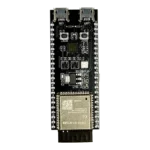
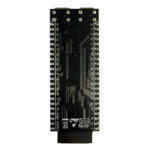


ESP32 S3 Board with 16MB Flash & 8MB PSRAM — DevKitM-1 (N16R8)
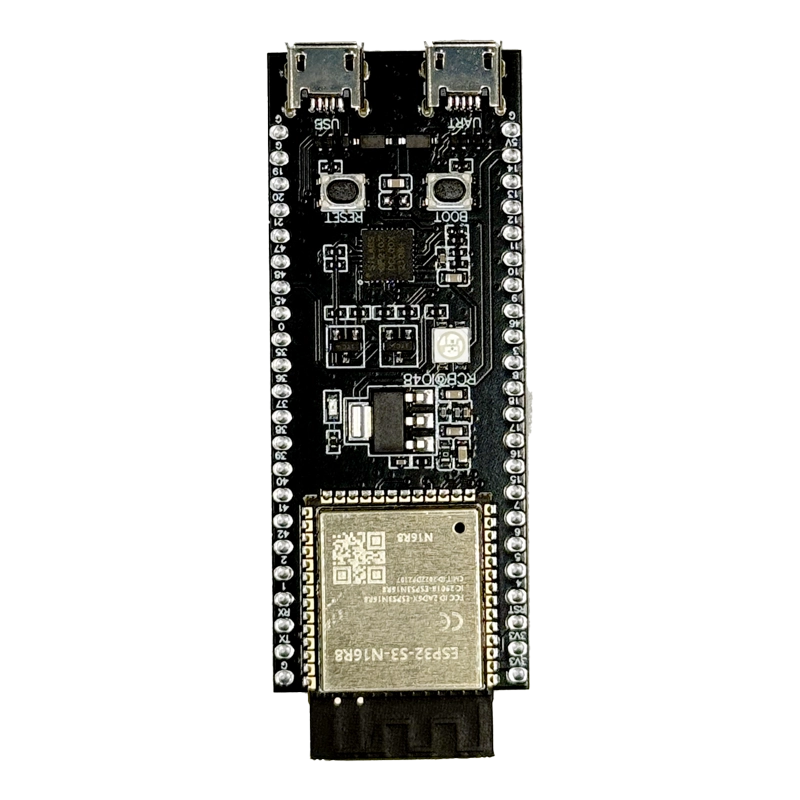
ESP32 S3 board enthusiasts finally have a variant worth getting excited about — the ESP32-S3 DevKitM-1 (N16R8) packs the most capable memory configuration available in this form factor, with 16MB of Flash and 8MB of Octal PSRAM, all on a compact development board designed for serious IoT and AIoT work. Whether you are building a cloud-connected sensor hub, a voice-controlled device, an edge AI application, or a full-featured web server, this board gives you the headroom that smaller-memory variants simply cannot match.
At its core sits the ESP32-S3-WROOM-1-N16R8 module from Espressif — a dual-core Xtensa LX7 processor running at up to 240 MHz, paired with the complete ESP32-S3 wireless stack: 2.4 GHz Wi-Fi (802.11 b/g/n) and Bluetooth 5 (LE). The N16R8 designation tells the full story — 16MB Quad SPI Flash for storing large firmware, LVGL UIs, file systems, and OTA images, plus 8MB Octal SPI PSRAM for runtime data buffering, large arrays, and memory-hungry libraries that would crash a standard 4MB board.
What Makes It Stand Out
Most ESP32-S3 boards in India ship with the N8R8 or N4 variants. The N16R8 configuration on this ESP32 S3 board doubles the flash to 16MB, which makes a real, tangible difference when you are working with: LVGL-based graphical interfaces that embed fonts and images into firmware; OTA update pipelines that need to hold two full firmware partitions simultaneously; large web server applications with HTML/CSS/JS stored in SPIFFS or LittleFS; and audio or ML inference models that are flashed alongside your application code.
The 8MB Octal PSRAM is equally important. Standard SPI PSRAM at 8MB can bottleneck on bandwidth; Octal SPI doubles the data bus width, delivering faster reads and writes — critical for frame-buffer applications, audio streaming buffers, and ML inference pipelines. If you are running TensorFlow Lite Micro or ESP-NN on this board, the PSRAM is not a luxury — it is a requirement. The official ESP32-S3-WROOM-1 datasheet provides complete electrical characteristics and module specifications for reference.
The board also includes an onboard RGB LED (WS2812-compatible), dedicated Boot and Reset buttons, a USB-to-UART bridge for plug-and-play flashing from any laptop, and JTAG debugging support — everything you need from day one without any additional hardware.
Why Makers Choose This ESP32 S3 Board
For makers in India building production-grade or advanced prototype projects, the ESP32 S3 board in N16R8 configuration offers something no basic development board can: genuine memory breathing room. When your ESP32-S3 project stops fitting in flash, you do not want to rewrite your code or split your application — you want a board that was specced correctly from the start.
The ESP32-S3 adds hardware acceleration for neural network operations through its vector instructions, making it the go-to chip for Indian makers working on edge AI: keyword spotting, gesture detection, face detection, and anomaly detection in industrial sensors. The 8MB PSRAM means you can load inference models at runtime rather than baking them into flash, keeping your application architecture flexible.
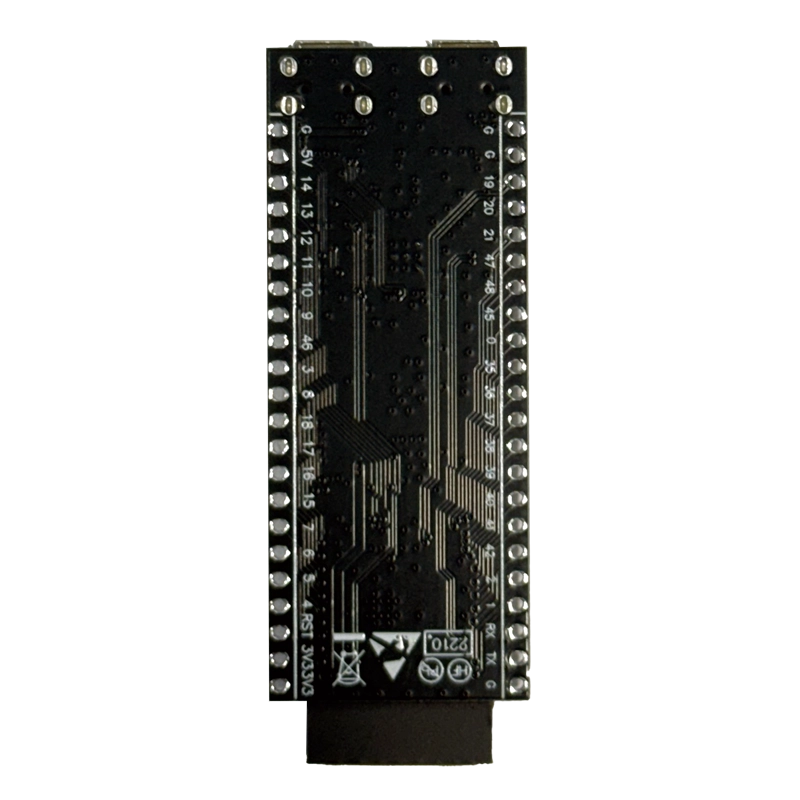
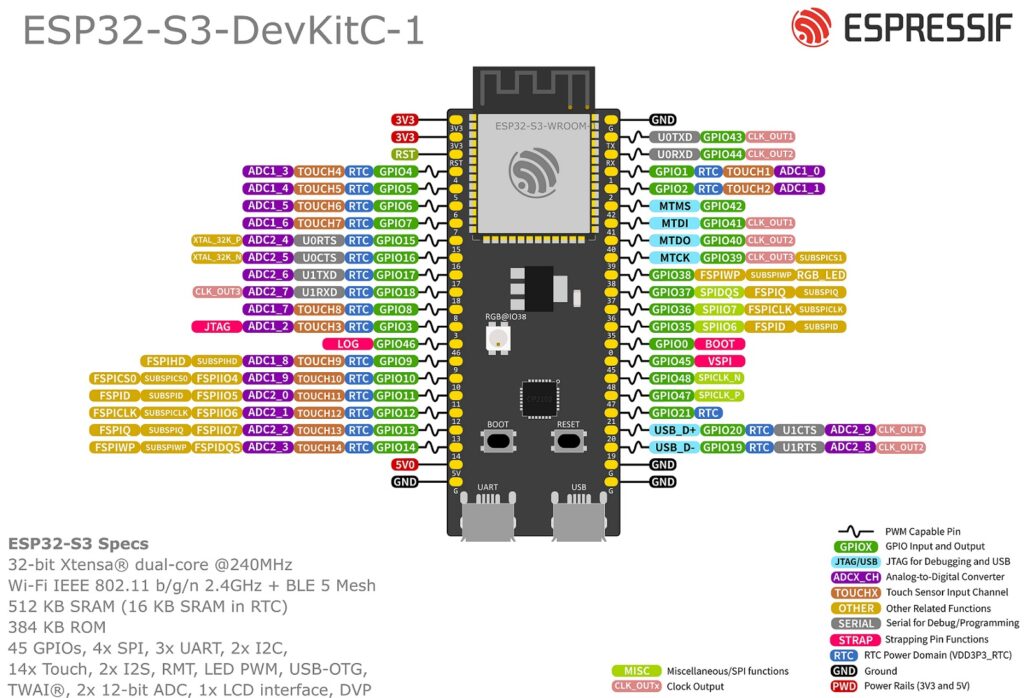
Programming support is excellent. The official arduino-esp32 library on GitHub supports the ESP32-S3 fully in both stable and development branches, and the Arduino IDE board manager installs everything in minutes. ESP-IDF is equally well-supported for production firmware development. The ESP32-S3 DevKitC pinout guide on Random Nerd Tutorials is one of the most thorough GPIO references available and applies directly to this board’s pin layout.
Technical Specifications
Here is the complete datasheet-verified specification table for this ESP32 S3 board:
| Parameter | Value |
|---|---|
| Microcontroller | ESP32-S3 (Xtensa LX7 Dual-Core) |
| Module | ESP32-S3-WROOM-1-N16R8 |
| CPU Speed | Up to 240 MHz |
| Flash | 16 MB (Quad SPI) |
| PSRAM | 8 MB (Octal SPI) |
| Wi-Fi | 802.11 b/g/n, 2.4 GHz, up to 150 Mbps |
| Bluetooth | Bluetooth 5 (LE) |
| GPIO | 36 total (33 externally usable on N16R8) |
| Interfaces | UART, SPI, I2C, I2S, PWM, ADC, USB OTG |
| Operating Voltage | 3.3 V |
| Power Input | 5 V via Micro-USB |
| Operating Temperature | –40°C to +65°C (N16R8 / Octal PSRAM variant) |
| LEDs | RGB LED + Power LED |
| Buttons | Boot + Reset |
| Debugging | JTAG supported |
| AI Acceleration | Vector instructions for neural network inference |
| Weight | ~16 g |
⚠️ N16R8 GPIO note: GPIO35, GPIO36, and GPIO37 are internally used by the Octal SPI PSRAM and are not available for external connections on this variant.
⚠️ DAC note: The ESP32-S3 does not include a DAC peripheral. If your project requires analog output, use PWM with an RC filter or an external DAC module.
Best Used For
This board excels in five categories of real-world maker and engineering projects.
Edge AI and TinyML applications are where the N16R8 truly shines. With 8MB Octal PSRAM and the ESP32-S3’s built-in neural network vector instructions, you can run keyword spotting models, face detection pipelines (using the ESP-WHO library), and gesture classifiers directly on the board — no cloud required, no GPU needed. The PSRAM holds your model weights at runtime while the 16MB flash handles the full application stack.
Graphical UI projects using LVGL (Light and Versatile Graphics Library) demand large flash and PSRAM for frame buffers, font atlases, and animation assets. Connecting a display over SPI and running a full-colour touchscreen UI is entirely practical on this board — something that would struggle or fail on a 4MB or 8MB Flash variant.
OTA-enabled IoT products benefit enormously from 16MB Flash. Standard OTA requires two full firmware partitions; with 16MB you can hold a large application firmware, an OTA staging partition, a SPIFFS/LittleFS file system, and still have room to spare. Deploy firmware updates over Wi-Fi to field devices confidently.
Audio processing and streaming is a natural fit. The ESP32-S3’s I2S interface paired with 8MB PSRAM lets you buffer audio streams, implement echo cancellation buffers, or run voice command recognition pipelines without running out of memory mid-stream. Pair with an I2S microphone or amplifier for complete audio solutions.
Advanced web server and data logging projects that embed large HTML dashboards, REST APIs, MQTT pipelines, and SD card logging can all coexist comfortably in 16MB Flash. Use LittleFS to serve a full React or vanilla JS frontend directly from the ESP32 S3 board without relying on external storage.
Frequently Asked Questions
Q1. How does this ESP32 S3 board differ from standard N8R8 variants?
The key difference is Flash capacity: this board has 16MB Flash versus 8MB on a standard N8R8. The PSRAM remains 8MB Octal SPI in both cases. The extra 8MB of Flash is significant for OTA applications, large file systems, and firmware that embeds fonts, images, or ML models. Everything else — CPU, wireless, GPIO, power — is identical between N8R8 and N16R8.
Q2. Can I use Arduino IDE to program this ESP32 S3 board?
Yes. Install the ESP32 board package via the Arduino IDE Board Manager (using the Espressif boards URL). Select “ESP32S3 Dev Module” as your board, set Flash size to 16MB, PSRAM to “OPI PSRAM”, and you are ready to upload. The official arduino-esp32 library fully supports the ESP32-S3.
Q3. Are GPIO35, GPIO36, and GPIO37 available on this board?
No — on the N16R8 variant, these three GPIOs are used internally for Octal SPI PSRAM communication and cannot be used for external connections. Plan your pin assignments accordingly; you have 33 GPIOs available for external use.
Q4. Does the ESP32-S3 have a DAC?
No. Unlike the original ESP32 which had two 8-bit DAC channels, the ESP32-S3 does not include a DAC peripheral. For analog output, use PWM with a passive RC low-pass filter, or add an external I2C/SPI DAC module such as the MCP4725.
Q5. What is the maximum operating temperature of this ESP32 S3 board?
Due to the Octal SPI PSRAM (R8 series), the maximum operating temperature is +65°C — lower than the standard ESP32-S3 module’s +85°C. This is specified in the official ESP32-S3-WROOM-1 datasheet. For industrial applications requiring higher temperature range, consider a non-PSRAM variant or the R16V series at +65°C with ECC enabled.


Reviews
Clear filtersThere are no reviews yet.